Canon B

We have been thinking about the Canon, the Great Western Canon, quite a lot lately.

Part of it comes with our Classics Club member cards. Being a Classics Clubber seems to involve thinking about the classics - about what makes a classic classic, about our relationship with these books and why they still have the power to affect us - quite a lot. We know we're not alone in this because we've read a handful of very insightful posts on this topic lately, all from fellow Classics Clubbers. And this is the part that makes us grateful that we have the classics, that, no matter their faults, they still have something good and beautiful to give.

Part of it is the discomforting realization that our map has a lot of uncharted territories in it. Like a medieval map, it is full of "Here be dragons," "Here be lions," "Here be writers we never heard of." We had this feeling reading Martina's excellent post about Polish literature. We have it every time we read a book that seems to have slipped through the cracks of the Western Canon. We even have it reading less known works from famous authors. It's like a feeling of vertigo. It's not that we had missed something - we will never read all the famous works, anyway - it's that no one told us there was something to miss. And this is the part that makes us crave more than the Western Canon, that makes us want to discover new books and new authors.

And, finally, part of it comes from an occasional desire to throw away maps altogether. There was this paragraph recently on Electric Literature's tumblr that made us nod in approval. It's from Michael Cunningham recommending a neglected classic:
I’m urging you to experience something like what I did, in consenting to read an obscure novel, an experience that involved not only the discovery of the novel itself but the attendant realization that the world is host to such novels—call them the “invisible classics.” Call them “Canon B.” It makes for a richer, more fabulous sense of what might be out there, beyond the titles one read (or pretended to have read) in college.
We read this and we thought to ask you: do you know any invisible classics? Do you know any works that should receive more attention than they do? Any works that are from foreign literature and receive little or no attention in Canon A? It doesn't have to be that they are completely neglected (an academic out there is surely writing articles about them as you speak), but that you feel they are not popular enough. I myself wish that more people read Boris Vian and more people read James' The Ambassadors (which, admittedly, doesn't lack for critical acclaim).

So please share your favorite invisible classics with us. We're taking notes and building A Hitchhiker's Guide to Canon B (also known as a to-read list). 


Review: Oranges Are Not the Only Fruit by Jeanette Winterson

Internet, I cheated. I wanted to wait until October to dive into the titles for Adam's LGBT reading event, The Literary Others, but brain is flesh and flesh is weak. So I caved in and the last two days of September saw me reading my first book for this event - Jeanette Winterson's Oranges Are Not the Only Fruit. And I have no regrets.

To start by addressing the most obvious question - yes, the book's title is a metaphor. Yes, it is exactly that transparent metaphor you're thinking of. Acting as if oranges are the only fruit and trying to impose that belief on others is the equivalent - in silliness, not toxicity - of acting as if only one set of values and one way of life are the right ones. And yes, oranges and all the ways in which they're really Symbols for Something Else (mostly traditional-to-fundamentalist Christian values and heterosexuality) feature quite heavily in the narrative. The effect is not as bad as you might expect.

Reading and Lingering

When I was little, I was a binge reader. If I found a book I liked, I'd read everything of its sort I could find. That's why I spent a few months at age seven reading a 50-book collection of folktales. That's why I read something like 20 Jules Verne books the following year. The faux-science bored me to tears, but I pushed through. This tendency persisted into my teenage years. Every time I liked a book, I would go on to read more and more titles from that author. It was not always the best decision either. If someone could give me back the time high school Claudia spent reading that 5th and 6th Kundera novel, I'd invest it in...I don't know, but it would be something a lot less repetitive.

With all of these books - not just the tales, the Jules Verne, the Kundera, but most of what I've read in my life - I rarely, if ever, felt the need to reread. Like most fast readers, I would occasionally worry that I'm not reading well, that there is a proper way to read, which includes deep thinking about every sentence and naturally takes forever. But if there was, I simply didn't have it in me. I did think about what I read while I read it, but my thoughts were as fast-flowing as my reading and only a few of them lingered after the reading. Sometimes after finishing a book that had been thought provoking, I'd feel guilty for wanting to read another book immediately, so I imposed to myself a "mourning" period, in which to Really Think about the book I had just read. The longest time I mourned a book by thinking about it was probably a full day, most of which was comprised of watching TV. There was no turning me into a more grounded reader.

The last couple of years something changed. I now read fewer books, significantly fewer books, but spend a lot of time thinking about them and returning to them. It feels weird and it's, I'm afraid, not terribly fit for blogging. I'm pulled between reading new things and lingering almost obsessively over the stuff I already read. I still have things to say about Daniel Deronda. I haven't yet properly reviewed Ulysses, but I spent a lot of time thinking about it this summer and, more recently, circling an unfinished post about it. The other day, I discovered a quote I remembered liking in Wolf Hall was historically inaccurate. I feel like writing analyses of Eminent Victorians. And so on, the list grows.

I'm still trying to come to terms with this new way of reading. My reading speed is the same, it's just the lingering on a book after I'm done with it that's new. And since grass is always greener on the other side, especially after you jumped the fence, I wish I could go back to being a fast, untroubled reader.

Why am I telling you all this? As a partial excuse for the lack of blogging lately, but mostly as a warning that I might continue to talk about the same set of books for a long, long time. I have hopes that the Literary Others reading event will add some new books to my lingering pile next month. But if not, Ulysses, here I come!

William Faulkner's Drawings

Ah, internet, where did the time fly? We're sorry to have bailed on you like that, but September was a bad month for science (and pretty much everything else). But, seeing how today is William Faulkner's birthday and how all of our other plans to celebrate it didn't come through, we figured we could still share something a little unusual with you. Did you know Faulkner could draw? 

Between 1916 and 1925, William Faulkner contributed with (paid) sketches to the annual of the University of Mississippi, the University's newspaper and the University's humor magazine. We scanned some of them for you from a book called William Faulkner: Early Prose and Poetry (which in the meantime we also found online, so sigh for our manually scanning these pictures). His drawings have a charming Jazz Age-y air about them and it's also quite likely that they were inspired by the style of 19th century artist Aubrey Beardsley (who rocks). Take a look at them below the jump and tell us what you think!

In Our Reading Lives

You may have noticed a distinct lack of Claudia and Alexis on the blog last week. That was because Claudia was too deep in the throes of Fretting About Life & Grad School to ramble about her reading and Alexis was busy moving house. While the aftereffects of fretting and moving are still being felt, we are back to blogging this week. Alexis has read The Language of Flowers and will talk about it soon(ish) and Claudia will be back discussing Henry James and whatever else strikes her fancy. If everything goes well, we hope to also launch a small side project this week, so keep your fingers crossed for us. 

But enough about our short-term plans. You might have noticed the pretty picture in our post. It's pretty self-explanatory. We signed up for The Literary Others: An LGBT Reading Event organized by Adam of Roof Beam Reader. We will be reading at least two books for this event (Giovanni's Room and Angels in America), but a lot of the titles on Adam's list appeal to us and we might have to start reading in September to cover more of them. We strongly encourage you to join. If you don't know what to read, there is an excellent list of recommendations on the sign-up post. It includes classics, contemporary fiction, YA, non-fiction, erotica, fantasy. You will definitely find something there to appeal to you. 


A Review to Remember

It's September, which means The Classics Club has another meme question for us to answer. And we have this one in the bag. Here's what we're supposed to do:
Pick a classic someone else in the club has read from our big review list. Link to their review and offer a quote from their post describing their reaction to the book. What about their post makes you excited to read that classic in particular?
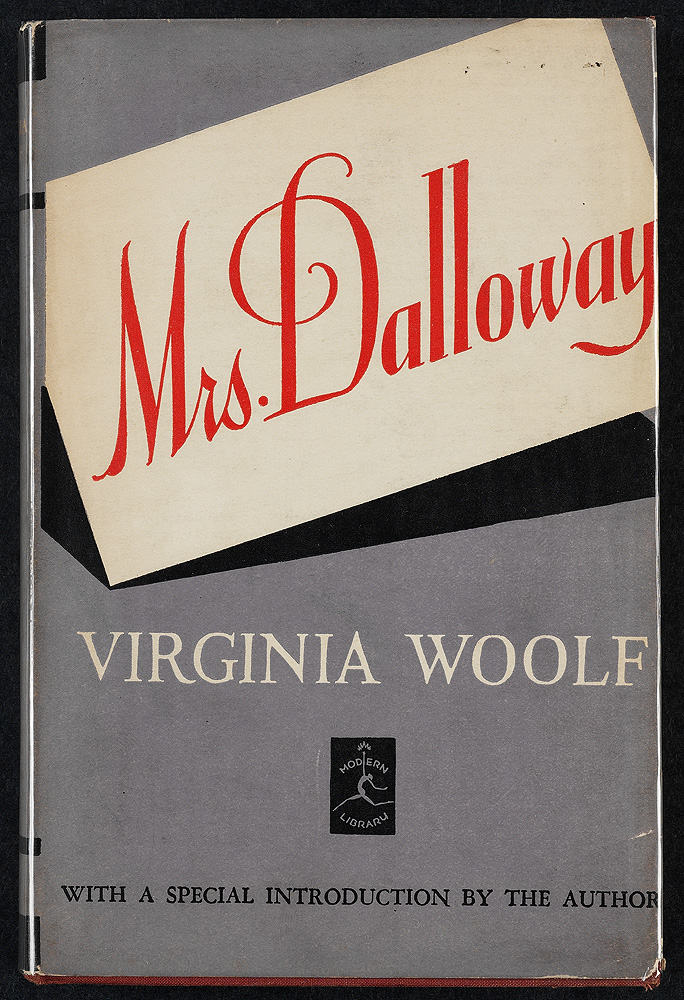
As soon as we saw this, we knew exactly which review to choose. It's a review that really stood out the first time we read it, for both its enthusiasm and the wide range of details it managed to cover without losing steam or becoming boring. It's a review that made us really look forward to reading the book it discussed, no small feat considering this is a book we're more than slightly intimidated by. It's Emily's review of Mrs. Dalloway by Virginia Woolf over at Reading While Female.

So what do we like about this review and why does it make us want to read Woolf? We like how it is specific, but not too specific. There is thread of enthusiasm and love for the book running through it and Emily offers just the right amount of details to support it. We understand why she loved the book: she offers enough examples and explanations for it to make sense. She talks about the characterization, the style, the themes and it's never just a vague pronouncement - 'These elements were good." - but always an explanation of why these elements worked, how they complemented each other, and what effects they produced on the reader. At the same time, it's not too detailed or spoiler-y. You don't feel like now you know everything about the book and there's no point in reading it. You feel like you were given a taste of the book and now you want more, which is very impressive considering the fact that the review doesn't contain a single sentence from Mrs. Dalloway. (Confession: a lot of reviews sell us on the books they discuss mostly through their Favorite Quotes section.)

Another thing that runs through this review and makes us trust the recommendation is the impression that the reviewer knows stuff, that their opinions are not only personal, but also well informed. (And this is something more Classic Club members share.) For example, we like the way Emily discusses some of the problematic aspects of this book as well (like the depiction of working-class characters). She does it by mentioning the general background (the problems modernism and early feminism have re: minorities and class), but also giving her own opinion on this particular book. It's a valuable insight we got from reading that post.

Okay, so this obviously turned into us reviewing a review and fangirling over it at that. Perhaps this was not entirely the point of the question, but this is what made us want to read this book. We will now end with a favorite quote and hope it will convince you to read the review and read Mrs. Dalloway:
Mrs. Dalloway is often hailed as one of the modern classics, and after reading it I can absolutely understand why. Woolf's use of style and structure serve to paint a picture of a woman, a truly human woman, complete with flaws and strengths, full of new hopes and failed dreams, and to show the people who come into contact with her throughout the course of a day. Despite the high literary style, it feels honest and uncontrived. The characters feel familiar, like the people you meet every day, and the feelings and thoughts they have could very well be your own. It is a beautiful, luminous, haunting book that will only improve upon rereading. I had a lot of expectations going in to this reading, and I am happy to say that Mrs. Dalloway exceeded them all.
Go read the rest here.